


The Cool, Creamy History of Ice Cream Sandwiches—and Why We Still Love Them Today
- ER Kent

- Jul 28, 2025
- 4 min read
Explore the delicious history, global variations, and modern twists of the ice cream sandwich—America’s favorite handheld frozen dessert

It’s one of summer’s most satisfying bites: cold, creamy ice cream hugged between two soft cookies or chocolatey wafers. No cone. No cup. No spoon. Just one perfect, hand-held frozen treat.
The ice cream sandwich is a nostalgic dessert that has managed to stay simple, delicious, and wildly popular for well over a century. But where did it come from? How did it evolve from a street-cart treat to a freezer-aisle staple? And how has it inspired everything from gourmet versions to novelty shapes?
Grab a napkin, because we’re digging into the sweet history, construction, and cultural staying power of America’s most iconic frozen sandwich.
Who Invented the Ice Cream Sandwich?
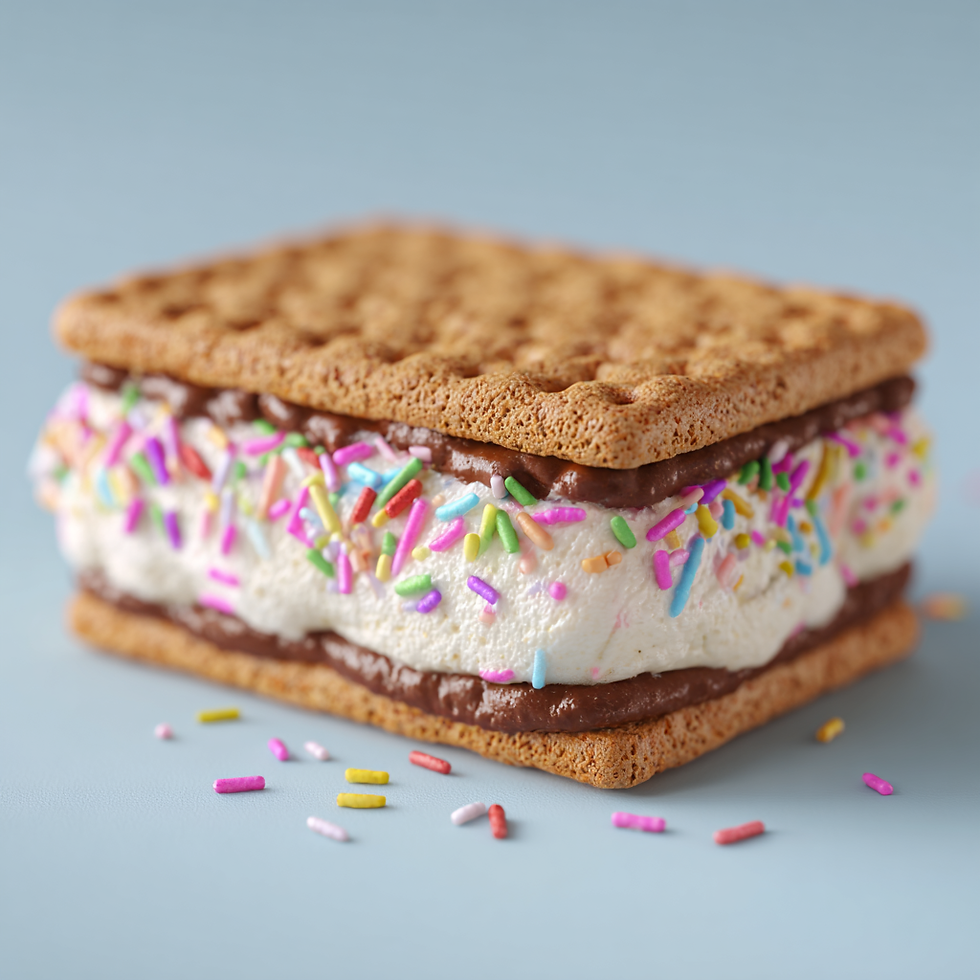
The exact origins of the ice cream sandwich are a little hazy, but most food historians agree it began in New York City around the turn of the 20th century. According to The Food Timeline, an early version of the dessert showed up in 1899, sold by street vendors who pressed vanilla ice cream between two thin sheets of graham crackers or sponge cake.
These original sandwiches were sold for just a penny and wrapped in paper so you could eat them on the go—long before ice cream trucks and branded packaging.
By 1900, a newspaper article from the New York Tribune described a vendor selling “a slab of ice cream between thin pieces of wafer,” and noted that he had lines down the block during hot summer days.

The Modern Ice Cream Sandwich Is Born
Today’s most recognizable version—rectangular chocolate cookies filled with vanilla ice cream—started showing up around the 1940s. According to Smithsonian Magazine, this update used soft, cake-like cookies and standardized the look and shape we still associate with store-bought ice cream sandwiches.
They became even more widespread in the 1950s and 60s, when supermarket freezer sections expanded and ice cream brands like Blue Bell, Good Humor, and Klondike started mass-producing the treat.
The indented chocolate wafer (the one with tiny holes) wasn’t just for decoration—it helps prevent the cookie from cracking as it freezes and thaws.

How They’re Made: Simpler Than You’d Think
At its core, an ice cream sandwich is just three parts: ice cream, cookie or cake “bread,” and cold storage.
Traditional commercial sandwiches use a soft, cake-like chocolate wafer made with cocoa, flour, and corn syrup, designed to stay pliable even when frozen. It’s pressed around a rectangular block of ice cream, often vanilla but now available in every flavor from mint chip to birthday cake.
Homemade and bakery versions are more creative. Think:
Chocolate chip cookies + cookies & cream ice cream
Brownie halves + salted caramel swirl
Peanut butter cookies + strawberry ice cream
Gingersnaps + lemon sorbet (yes, you can do dairy-free too!)
For a recipe you can try at home, check out this easy how-to from King Arthur Baking.

Global Variations Around the World
The concept of sandwiching frozen desserts is beloved worldwide—and not just in America.
In Australia, the “Giant Sandwich” and “Maxibon” feature wafers or cookies wrapped around ice cream, sometimes dipped in chocolate.
In Iran, traditional ice cream sandwiches use saffron and rosewater ice cream pressed between thin wafers.
In Vietnam, ice cream is often served between two slices of soft sweetened bread, creating a cold, chewy contrast.
In Singapore, vendors sell pandan or yam-flavored ice cream slices tucked into rainbow-colored bread.
And in Italy, the brioche con gelato—a warm, buttery bun filled with scoops of gelato—is the ultimate summer breakfast.
These variations show just how flexible and beloved the concept of the ice cream sandwich is around the globe.

Modern Takes and Gourmet Twists
Ice cream sandwiches had a full-blown comeback in the early 2000s, as artisan bakeries and food trucks began creating upscale versions using house-made cookies and premium small-batch ice cream. Places like Coolhaus and The Baked Bear turned the simple sandwich into a customizable dessert event.
You can now find versions with:
Macarons instead of cookies
Donuts as the sandwich layer
Matcha or ube ice cream
Gluten-free or vegan options
And for nostalgic types, brands like Nestlé and FatBoy still produce the classic rectangular bars with chocolate wafers and that unmistakable chew.

Why It’s Still America’s Favorite Frozen Treat
Part of the reason the ice cream sandwich has stayed popular for more than a century is that it’s practical, portable, and deeply satisfying. Unlike cones, there’s no drip mess. Unlike sundaes, there’s no need for a spoon.
It’s dessert you can eat with one hand, and let’s be honest—it still tastes just as good as it did when you were a kid chasing the ice cream truck.
According to Statista, ice cream sandwiches consistently rank among the top-selling frozen treats in U.S. households, beating out fancier novelties and even some scoopable ice cream options.

A Few Fun Facts to Cool You Down
July is National Ice Cream Month, and the third Sunday is National Ice Cream Day—a perfect excuse to eat one (or three).
The average American eats more than 20 pounds of ice cream per year, according to the International Dairy Foods Association.
The world’s largest ice cream sandwich weighed over 2,500 pounds and was made in New York in 2014, per the Guinness World Records.

The Ice Cream Sandwich: Always In Style
From penny treats in 1900 to gourmet creations in food halls today, the ice cream sandwich is proof that sometimes the simplest ideas are the most genius. It’s a dessert that doesn’t need a fancy name or a complicated origin story—just good ingredients, good timing, and a freezer.
So whether you’re loyal to the original chocolate-and-vanilla or partial to a trendy, color-swirled version with sprinkles on the sides, one thing’s for sure: this is one sandwich that will never go out of style.



Comments